01. The Signal: Filtering Noise from Meaning
A dictionary shouldn't define every word—only the ones that matter. In a live conversation, common
words like "the," "and," or "meeting" are noise. The technical terms are the signal.
To solve this, we implemented TF-IDF (Term Frequency-Inverse Document Frequency) to analyze
conversation transcripts in real-time. This statistical method evaluates how important a word is to
the current specific conversation relative to general language.
02. The Logic: Dynamic Definitions
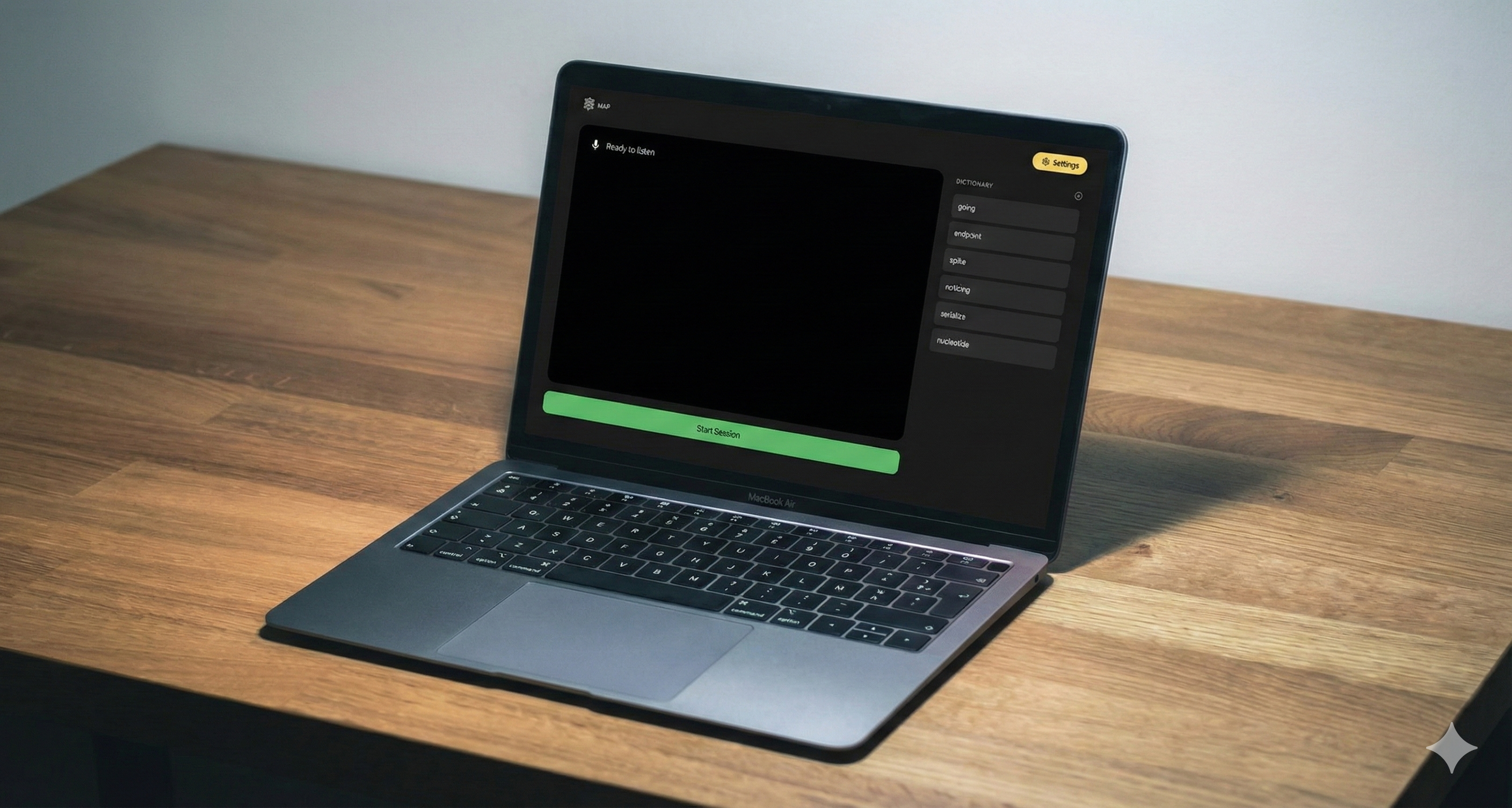
This is where the "Dynamic Dictionary" comes to life. A static dictionary gives everyone the same
answer. MAP translates the answer based on the user.
May 2025
Skills
UX Research, Rapid Prototyping, Problem Solving, Collaboration, Presentation
MAP: A Dynamic Dictionary
In interdisciplinary environments, like a hackathon or a product sprint, language barrier is often a silent killer. An engineer discussing "latency" and a designer discussing "affordance" are often speaking past each other. Traditional tools fail here because they offer one definition for everyone, ignoring the context of the conversation and the background of the listener. LLMs like ChatGPT and Claude can help bridge this gap, but they often require active input which often breaks the flow of the coversation, and increases friction during discussions. To help with this, we created Project MAP, an adaptive intelligence system that decodes technical jargon in real-time. Moving beyond static definitions, it dynamically adapts explanations to the user’s specific level of expertise, and background helping diverse teams build a Shared Mental Model without breaking their conversational flow.
Problem Breakdown
Collaboration
Immigrants often face challenges managing and investing the money they have access to. The situation becomes especially challenging when they need money but lack a Social Security Number. Banks, the system does not bridge them to successful onboarding. The system also fosters a sense of community to support internal lending practices, offering an alternative to traditional credit checks based on Social Security Numbers.
Team
Anoop Pakki, Mark Goberdhan, Prarthana Centhil
Special Thanks To
Andreea Coteranu, NYCDF